Letter from the President

At the University of San Diego, we are all people on a journey, for that is the very nature of the intellectual life. Moreover, we spend our lives attracting companions — students — and hope that they, too, will become lifelong adventurers on this pilgrimage. The historic pace of USD has been anything but leisurely. What our faculty has accomplished since the school was founded is nothing less than amazing. The more than 40,000 alumni living and working around the world are the school’s living legacy.
Since my arrival on campus four years ago, I have marveled at the progress we have made in our strategic directions. Our commitment to academic excellence is demonstrable, and the quality of the student experience has been greatly enhanced by collaborative work that has resulted in more integrated learning, improved advising and career services, and huge investments in technology and commitments to capital projects.
The university’s vision keeps us moving, much like that of our founders, Mother Hill and Bishop Buddy, whose bold ideas extended well beyond their own horizon. Theirs was a vision of life that inspired a grand plan for higher education. They and their colleagues created this university out of a conviction that every human being is sacred, created in God’s own image and, as such, worthy of love, of dignity and of justice.
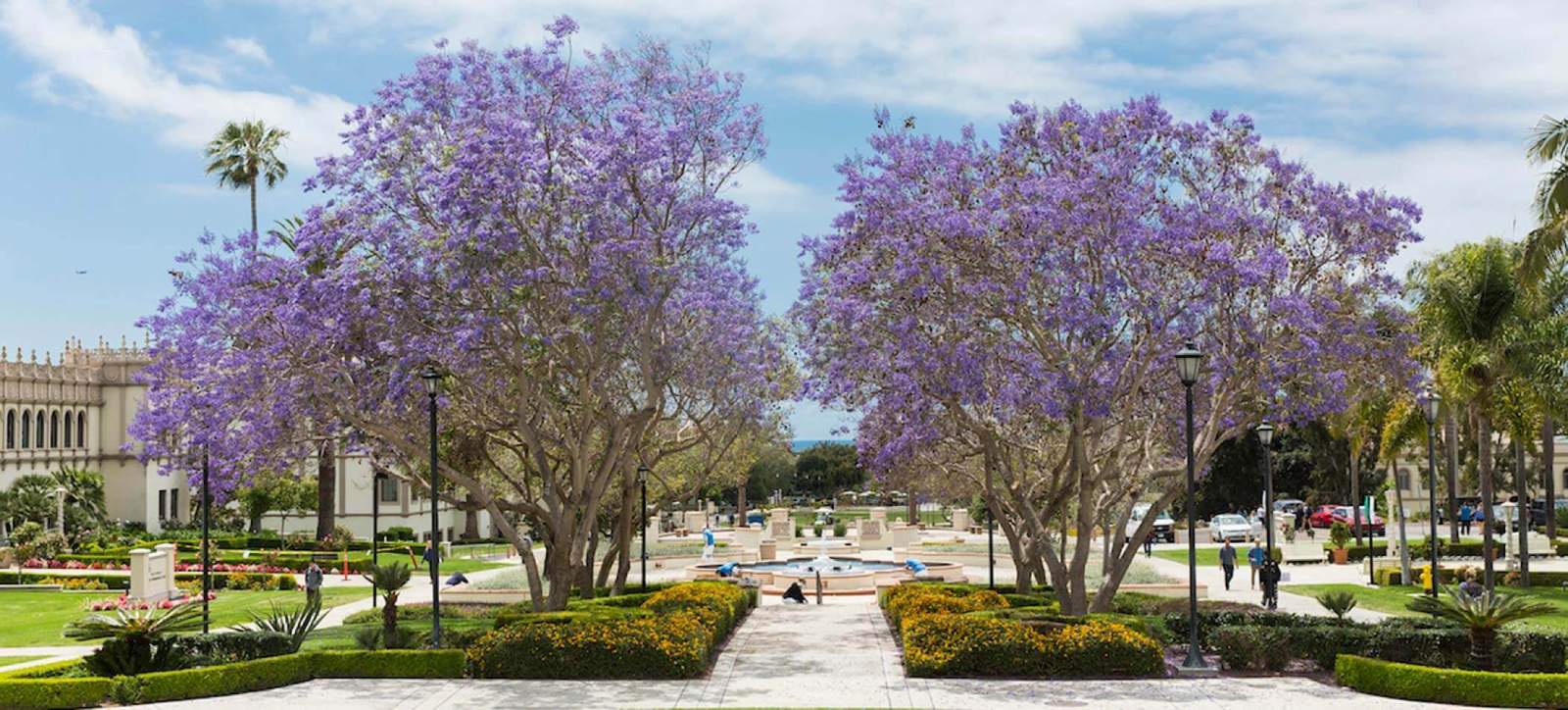
A university that holds steadfastly to the principle of human dignity honors its students by offering an education of the highest quality, not compromising on excellence. This pattern was set early on by the Sisters working at the women’s college, who insisted on creating beautiful spaces and gardens for their students, sacrificing their own material comfort in that effort. Why? Because if you believe that human beings deserve intellectual, aesthetic, physical and spiritual nourishment, you must feed them.
It is my hope that in the following pages, you will find something to nourish your own yearning for beauty and knowledge, and that, once full, you will reach out to those who remain hungry.
— Mary E. Lyons, President
* Portions of the above remarks are excerpted from “Are We There Yet?,” a speech that was delivered at the President’s Convocation in September 2007.
The Year in Review
Leaves on the trees here don’t generally turn color, and snow doesn’t often fall in San Diego, but the local seasons do have their own subtle rhythms. As 2007 began, the campus reflected its more contemplative side as students and faculty scattered for winter break, but before long, the bustle and flow of a new year was apparent.
In January, USD’s Autism Institute hosted one of two well-attended education conferences, led by institute founder and professor Anne Donnellan. February brought the 14th annual All-Faith Service, which focused on the theme of cultivating peace. Also that month, USD’s Mortar Board honor society was singled out for national recognition with the Ruth Weimer Mount Chapter Excellence Award.
As buds on the trees started to emerge in the spring, the pace of campus life quickened. March marked the opening of the new Robert and Karen Hoehn Family Galleries in Founders Hall. High fashion came to USD in the form of Kyoto Laureate honoree Issey Miyake. And new basketball coach Bill Grier became the Toreros’ 11th head coach in program history. It was a banner year for Toreros sports: The baseball team had its best performance in school history; coach Ron Caragher took over leadership of the football team and women’s basketball broke the school record for wins in a season.
A celebration of nine outstanding USD graduates was held during the Alumni Honors gala in late April. Author E. Hughes Career Achievement Awards went to alumni from each of USD’s five schools: Ali Reza Arabnia ’87 (M.B.A.), Leonard Armato ’78 (J.D.), Rebecca (Haddock) Smith ’93 (M.Ed.), Timothy Luberski ’73 (B.A.) and Linda Urden ’89 (D.N.Sc.). The Mother Rosalie Clifton Hill Award was bestowed upon Jean (Hicks) Miller ’59 (B.A.), and the Bishop Charles Francis Buddy Award was given to Christine Schanes ’69 (B.A.). This year, Alumni Honors included inductees to the Chet and Marguerite Pagni Family Athletic Hall of Fame; these honorees were Jose Luis Noriega ’92 (B.B.A.) and Jebediah Dougherty ’97 (B.B.A.).
In addition to commencement, May brought the announcement that the founding dean for the Joan B. Kroc School of Peace Studies had been selected. Father William Headley, C.S.Sp., Ph.D., has worked in more than 80 countries toward peace and justice; most recently, he served as counselor to the president of Catholic Relief Services.
Darlene Marcos Shiley, respected philanthropist and longtime community leader, was elected chair of the board of trustees; she began her term on July 1. Additionally, four new trustees joined the board: U.S. Bancorp President and Chief Executive Officer Richard K. Davis, higher education advocate Margarita Palau Hernandez ’82, retired MGM Grand Resorts President and CEO John T. Redmond, and business leader David H. Shaffer. The fall, of course, is an academic beginning each year, and this particular season was made exceptional by the completion of the new building to house the School of Leadership and Education Sciences. Mother Rosalie Hill Hall — named in mem-ory of one of USD’s founders as well as to honor the Religious of the Sacred Heart for their work and commitment in making USD the place it is today — provides students, faculty and administrators with a stunning array of classrooms, meeting spaces and offices, bringing all the members of the SOLES family under one roof for the first time in the school’s history.
In October, the Joan B. Kroc School of Peace Studies was inaugurated with an eagerly anticipated public event that brought members of the university’s surrounding community to campus to listen to the inspirational words of founding Dean William Headley, actor and activist Martin Sheen and Catholic Relief Services President Ken Hackett.
The wildfires that swept through San Diego County later that month destroyed homes and disrupted life off-campus and on. Though classes were cancelled for an entire week, student volunteers rallied to join with Dining Services and the Center for Community Service-Learning to prepare and deliver meals to those county residents evacuated to Qualcomm Stadium. In the weeks that followed, the campus community came together to provide further direct support to those affected by the massive evacuations and the fires, both through prayer and concrete acts of compassionate service.
The welcome crisp, cool days of November heralded Homecoming, which brought alumni back to USD to reconnect with friends. And as the year came to a close, students, faculty and staff celebrated the tradition of Alumni Mass, gathering to ponder the true meaning of Christmas while rejoicing in the birth of the Savior in the beloved environs of our own Founders Chapel.
State of the University
At the end of the 2006-2007 academic year, the University of San Diego awarded 1,183 undergraduate degrees to its students, along with 941 graduate degrees, over the course of a joyous weekend that celebrated the school’s mission: to advance academic excellence, expand liberal and professional knowledge, create a diverse and inclusive community, and prepare leaders dedicated to ethical conduct and compassionate service. And through our alumni, both vintage and newly minted, the underlying philosophy of our institution lives on long past graduation.
While the work that goes on in our classrooms is paramount, we have marked a number of milestones this year. First and foremost, the 2007-2008 academic year marks the 35th anniversary of the joining of the University of San Diego College for Men and School of Law, and the San Diego College for Women into one unified University of San Diego. That partnership was destined for greatness; in fact, when the university announced the merger during the summer of 1972, then-President Author Hughes wrote that “a great city deserves a great university.” That promise was certainly manifested in 2007, as BusinessWeek magazine ranked USD’s School of Business Administration as one of the top 50 undergraduate business programs in the nation, making it the only ranked university in San Diego County and the fourth highest-ranked program in California. This year also saw the dedication of the School of Leadership and Education Sciences’ stunning new building, Mother Rosalie Hill Hall, the result of years of hard work and planning. The long-anticipated launch of the Joan B. Kroc School of Peace Studies was yet another landmark moment in our university’s history.
Increasing national recognition and rankings, the ever-higher academic profile of our incoming students and the recruitment and retention of top-flight faculty are just a few examples of how the University of San Diego’s common vision — first manifested by our founders, Mother Hill and Bishop Buddy — lives on not just today, not just tomorrow, but into a future that our campus community’s hard work is creating, year after year.
College of Arts and Sciences
On behalf of our faculty and students, we want to thank you for your support of the College of Arts and Sciences. I have been in San Diego for a year and just completed my first as dean. Coming to the University of San Diego from St. John’s University in New York, I knew there was something special about this university, and indeed, it is a wonderful place to be.The College of Arts and Sciences provides a strong foundation in the humanities, sciences, arts and social sciences. Our mission is to create a learning environment where there is extensive interaction between faculty and students, who then learn to understand, develop and use their own intellectual resources. We cultivate a learning environment that is dedicated to small classes, equally emphasizes teaching and research, and encourages students to think creatively, critically and globally
These past 12 months have been an exciting time of growth for our college. This year we hired 19 new and talented professors. We were selected as a recipient of a Clare Booth Luce Professorship, a prestigious award that supports the advancement of women in science. Faculty and students are conducting research across the globe — from Antarctica to Uganda to the U.S. Virgin Islands to Baja California — and publishing their work. In partnership with The Old Globe Theatre, we celebrated the 20th anniversary of the Masters in Fine Arts program, widely regarded as one of the best in the country. Also, members of our faculty are gaining national and international prominence for their research and publications and receiving highly coveted prizes such as the Fulbright Fellowship
As we finalize our Academic Plan and launch new initiatives within the College of Arts and Sciences, we are mindful of the vision of our founders, Mother Rosalie Hill and Bishop Charles Francis Buddy, and the mission of the University of San Diego: to establish a premiere Roman Catholic institution committed to academic excellence, expand liberal and professional knowledge, create a diverse and inclusive community and prepare leaders dedicated to ethical conduct and compassionate service.
— Nicholas M. Healy, Dean
Cultural Leap
College of Arts and Sciences professor Ken Serbin has an abiding thirst for knowledge when it comes to the rich history of Latin America
The passion for Latin American history held by Kenneth P. Serbin, specifically that of Brazil, dates back to 1986, when he made his first trek there.“Even though I’ve been going to Brazil for almost 22 years, it’s always a new cultural experience for me when I go there,” says Serbin, who has spent a total of eight years in the country.
”Their culture is very different. A lot of people in the world speak Spanish, but what a lot of people don’t know is that Brazil’s language, Portuguese, is the fifth-most-spoken language in the world.” In studying Brazil’s rich history, Serbin focuses on the history of the Catholic Church, social and reproductive issues, and the relationship between religion and democracy. His award-winning book on Brazil’s clergy was published by the University of Notre Dame in 2006.
Serbin notes that Brazil’s famed diversity goes beyond that of faith and ethnicity. “Brazil has South America’s largest concentration of industry, and is one of the 15 largest economies in the world. But it is also one of the most unequal countries because there are millions of people who live on no more than a few dollars a day,” Serbin explains.
The president of the Brazilian Studies Association, Serbin has built a reputation as an author and is a sought-after expert by various media.
The professor — on sabbatical for the 2007-08 school year — secured two major fellowships in 2007, a Fulbright-Hays Faculty Research Abroad Fellowship and the American Council of Learned Societies Fellowship. The support will help him make “substantial progress” on his next book, he says. Its focus is on the history of political prisoners and revolutionaries during Brazil’s military dictatorship (1964-1985) and redemocratization.
He has more than 200 hours of recorded interviews — all in Portuguese — a testament to his ability to uncover important Brazilian history. “I’ve been networking for 22 years now,” he says. “I’ve been interviewing these people for more than 10 years.” While USD has provided Serbin with resources for his travel and research, the former interim director of the Trans-Border Institute hopes to see the Joan B. Kroc Institute for Peace & Justice and the Joan B. Kroc School of Peace Studies expand their reach into Latin America, and believes the university should open a Latin America institute.
“After students take a class on Brazil, they want to go there,” says Serbin. “I seek to inspire people to be interested in history and to learn about other cultures.”
School of Business Administration
I am happy to share with you several pieces of information coming out of our school. First, BusinessWeek magazine ranked USD’s School of Business Administration (SBA) at No. 46 on the list of top undergraduate business schools. There are 485 undergraduate programs that have achieved the international accreditation from the Association to Advance Collegiate Schools of Business, and our ranking puts us in the top 10 percent of this elite group. Additionally, our M.B.A. program was recently ranked 36th in the world — and the highest ranking program in Southern California — according to the Aspen Institute’s 2007-2008 edtion of Beyond Gray Pinstripes. Improved rankings raise the value of the USD business degree.Second, we have worked to improve the quality of our students’ experience. At the undergraduate level, we are improving student service by offering two new majors, one in marketing and the other in finance. We are also taking steps to improve undergraduate student advising and career placement of our business students. The first floor of Olin Hall is being transformed to serve our students’ advising, internship and career placement needs. At the graduate level, we have revised our M.B.A. program. The program is distinguished by its values-based curriculum, including courses in Peace Through Commerce and Corporate Governance. To improve the student experience, each student has been assigned a mentor from the business community. Additionally, the SBA supports many international opportunities, including study abroad and consulting experiences for our students. We have also begun to improve graduate student career placement through the creation of “HIRE San Diego,” which is an attempt to develop critical mass so that large employers can come to San Diego and interview graduating M.B.A. students from USD and other local universities, all at the same time, on the USD campus.
Third, David Pyke, associate dean at the Tuck School of Business at Dartmouth — widely recognized as having one of the top 10 M.B.A. programs in the country — has accepted the position of dean of the School of Business Administration. He will be drawing on his experience at Tuck to help us improve the recognition and reputation of our business school, and will join us this coming summer. He is excited about becoming a part of the USD community.
— Andrew T. Allen, Interim Dean
Heart-Connected
Getting up close and personal is the point behind student trips to Tijuana led by School of Business professor Stephen Conroy
Stephen Conroy may teach economics, but his students are learning about much more than supply and demand. One student is at once shocked and impressed by the resourcefulness of poor families in Tijuana who convert scrap garage doors into building materials and pallets into cooking fuel. Another observes that a young woman who looks to be her own age is already raising three kids. But for birth place, either situation could be theirs.These aren’t dry textbook lessons. The students cross the border and talk with household members; they see — and maybe even help build — a family’s modest abode.
Conroy’s Economics 101 class makes a weekend trip to Tijuana every fall. Students may help build a house near the Tijuana dump or work at a community center.
“I just want them to be exposed to another reality. I want them to experience another economy up close,” Conroy says. “There’s something about actually being in a place physically that takes you somewhere emotionally. You’re forced to embrace that reality and experience it. I want them to be looking in the faces of the poor deeply ... and to see them as human beings.”
And they do. Conroy always has his students write papers after the trips to reflect on their experiences. He says the trip “seems to be very profound for many students.” “I’m fascinated by every reflection paper I read,” he says. “It is amazing to see the difference between their prior expectations and the reality they experience.” Conroy also shows them other sides of the city, taking students to a wealthier district for a steak and lobster dinner.
“It may create a conversion experience — a conversion of the way people view the world. We can talk about corporate social responsibility in class. But unless people are connected — heart-connected — it may remain just an intellectual experience.”
Conroy says economics is not only interesting, but has always helped him to make sense of the world. Once he got in front of a class of students to teach economics, he realized he’d found his passion. He hopes the trips to Tijuana have a positive influence on students’ lives and how they see the world.
“I know that it’s important for students to feel like they are delivering a product or service, but I also realize that in the end they are really going to be net beneficiaries in the exchange.”
SCHOOL OF Law
The School of Law has made significant progress in a number of areas this past academic year, with a central focus on improving the student experience.We augment our students’ educational experience by bringing distinguished speakers to campus. Within the past year, we have been visited by both U.S. Supreme Court Justice Antonin Scalia and retired U.S. Supreme Court Justice Sandra Day O’Connor. In Spring 2007, we hosted a spirited debate on presidential war powers between USD School of Law Professor Mike Ramsey and University of California, Berkeley, Boalt Hall Professor John Yoo, the architect of the Patriot Act and author of the controversial “torture memo.” The following month, we welcomed noted consumer advocate and former presidential candidate Ralph Nader, who spoke to a standing-room-only crowd on the topic of “Challenging Corporate Power and Building Democracy.” We concluded the 2006-07 academic year with a commencement address by Justice Alan Page of the Minnesota Supreme Court, also known to sports fans as a National Football League Hall of Fame defensive lineman for the Minnesota Vikings. Today, Justice Page’s work includes enhancing the opportunities for minority youth to pursue their college education.
The school recently secured a $250,000 contribution specifically earmarked for enhancing student services. This past summer, we began a multi-phased facilities renovation, which began with a major expansion and renovation of the school’s Career Services Center. Not only did this improve the facilities for students seeking information about career opportunities; it also provided space for the increased staff we have added to facilitate students’ job searches. The law school’s large classrooms were rewired, and the furniture was replaced with ergonomic seating. In addition, classroom tables were equipped with pop-up electrical and data jacks. These renovations will continue through 2009.
Of course, excellent teaching remains the core of a USD Law School education, and we continue to focus on this longstanding strength. But our increased attention to other aspects of the student experience has already returned substantial benefit to our students and promises to accelerate the progress of our nationally recognized law school.
— Kevin Cole, Dean
Extreme Makeover
Law Career Services office undergoes major renovation to provide a welcoming environment for students of USD’s School of Law
The job market can be tough, but for students in the University of San Diego’s School of Law, a one-stop shop with multiple resources to help them land that career-opening position just got a much-needed makeover.The Law Career Services office underwent a major renovation in Summer 2007, nearly doubling the size of the work space, expanding it by more than 940 square feet. “Career planning is more than just searching for a job,” says Cara Mitnick, assistant dean for Career Services at the School of Law. “It’s a finely tuned strategy that can feel stressful for students without the right conditions and support.” The renovation was made possible with a $250,000 contribution, part of a major fundraising campaign specific-ally earmarked for enhancing student services. The project involved the demolition of existing walls between Warren Hall suites 111, 112 and 113 to incorporate them all into one larger room.
The area provides several work stations as well as textbooks, reference guides and various materials to assist law students with tips on resumés, job search applications, interviews and resources such as fellowships and other career opportunities.
“The renovation means students can more easily create their applications for employment in a comfortable environment with ample light and access to computer capabilities,” Mitnick explains. “They can interview in nicely appointed rooms. They can meet with career advisers more easily. Essentially, students now use our office more frequently because they feel welcome.” The renovation of the Career Services area isn’t the only upgrade for the Law School. Other improvements, slated to continue through 2009, include renovating and rewiring classrooms and equipping them with pop-up electrical and data jacks. The need for improved facilities is one area that Dean Kevin Cole addressed when he took the job in April 2006. He wasn’t alone. Indeed, creating “a modern environment where employers enjoy interviewing and participating in student programs as panelists” had also been on the wishlist of employers and alumni alike, Mitnick says. “Many of our alumni serve as recruiters for their law firms and visit our offices looking for outstanding candidates. When they enter the new offices, you can see that they are pleased with the changes,” Mitnick says. “The new facilities give our alumni recruiters a sense of pride about their alma mater.”
Hahn School of Nursing and Health Science
This year marks the 34th anniversary of Philip and Muriel Hahn’s generous contribution that launched USD’s Hahn School of Nursing and Health Science. Since then, the school has taken seriously its mission to educate intelligent, skilled and ethical nurse clinicians, scientists and executives. We have graduated more than 1,500 nurses — 150 with doctorate degrees — who now serve as health-care leaders across the globe. In the past year, we have launched our Office of Nursing Research, directed by a skilled nurse researcher and staffed with research methodologists, statisticians and grant writers. This office helps faculty prepare research grants that address some of the most critical health-care problems of our time, and integrate teaching, research and clinical practice missions with the most vulnerable of our populations. Our new Office for International Nursing coordinates local and international health missions in San Diego, Mexico and Uganda, Africa. In its latest mission, the school is collaborating with the Archdiocese of Mbarara, Uganda, to establish a children’s hospital to deal with malaria and other preventable childhood illnesses that kill more than 10,000 children each year. Our new Simulated and Standardized Patient Nursing Clinic houses six simulated hospital units, an array of computerized mannequins and our unique Standardized Patient Program, in which faculty develop clinical case studies and scripts for more than 40 actors and actresses who help train and test our students in videotaped sessions.
Today, with the largest group of students in our history, our faculty boasts four fellows in the American Academy of Nursing — a most distinguished honor. New to our faculty are Associate Professor Lois Howland, Ph.D., public health, Harvard University and post-doctorate, Virginia Commonwealth University; Clinical Professor John Lantz, Ph.D., adult education, Texas A&M and post- doctorate, Administration on Aging; and visiting Professor Karen Skerrett, Ph.D., psychology and human development, University of Chicago. Thank you to our donors and friends who have enabled us to renovate most of the major spaces within the school and convert all of our classrooms into “smart” learning spaces. Special thanks to our clinical partners Palomar/Pomerado, Scripps La Jolla and Scripps Mercy, who have provided support for their top nurse executives and clinicians to enter our programs. We are most grateful to the more than 200 San Diego nurse practitioners and physician preceptors who donate their time and talents to prepare our next generation of advanced practice nurses. We wish you the best of health!
— Sally Hardin, Dean
Life Lessons
Ugandan hospital project brings hope to children with the help of the School of Nursing and Health Science and its dedicated team
Malaria is a disease that appears far removed from the average USD denizen. But in the Hahn School of Nursing and Health Science, students, faculty and researchers are sharing their expertise to help a Ugandan community lower the number of children affected by the mosquito-borne disease.In Uganda, “They see the future of their country in the eyes of their children,” says Anita Hunter, Ph.D., CPNP, FAAN, director of Masters and International Nursing Programs. With malaria killing some 10,000 children a year just in the city of Mbarara, that future may look bleak. So the School of Nursing is acting as a consultant to a children’s hospital being constructed in Mbarara. The project involves a needs assessment, actually providing care and research into how well the project delivers on its goals. In March 2007, Hunter and six USD nursing students visited Mbarara to begin scoping out the project. “We had to consider the long-term effect on the community at large,” Hunter says. The School of Nursing designed the hospital, keeping a village feeling. With groundbreaking set for early 2008, the pediatric hospital should open in June. But the project isn’t aimed only at providing health care. Future international projects likely will be improved by the School of Nursing’s research. The aim is not only to see if the hospital actually reduces malaria and children’s deaths from malaria, but also to delve into such measures as the training and retention of health care workers, and the long-term effects of nursing interventions on children.
“Historically, international projects have not always had a research component,” explains Cynthia Connelly, director of nursing research in the School of Nursing.
While the school is taking the lead where USD’s consultation role is concerned, the hospital project also brings in several other schools from the broader university community. The School of Business and the chemistry department will be participating on a trek to Uganda in January 2008.
“Students who have gone on medical missions are affected at a deep level,” Hunter says. Some students begin to realize how much they may be missing out on in their regular lives because of television and technology. “They find that people in these developing nations have a particular joy in living that the student has never experienced. They have a love of life and love of one another that the student has never seen.”
Joan B. Kroc School of Peace Studies
The Joan B. Kroc School of Peace Studies was launched in August of 2007. As the founding dean, I am pleased to report on the annual activities of its units: the Joan B. Kroc Institute for Peace & Justice (IPJ); the Trans-Border Institute (TBI); and the operations unit responsible for managing the building that houses the school. A protocol for transferring the Master of Arts in Peace and Justice Studies to the school has been established.The fifth cohort of students in the M.A. program completed their degrees in August 2007. Students in the 13-month program came from the United States, Sudan, Tanzania, Iran, Brazil and Thailand. For their capstone project, eight of the students conducted research in a Tanzanian refugee camp on health care, education, resolution of camp conflicts and income-generating initiatives. Students’ career plans include positions at non-governmental organizations, in government and further academic training.
The IPJ worked in four strategic areas: gender inclusion; educating for social/political change; peacebuilding methodologies; and the relationship between peace and justice. The Women PeaceMakers Program produced its third documentary film. The institute continued its innovative peacebuilding work in Nepal and in Uganda. The Distinguished Lecture Series hosted Nobel laureate Shirin Ebadi, and the IPJ collaborated with units across campus on more than 40 events. The WorldLink program brought more than 700 young people to its 10th annual Youth Town Meeting.
The TBI promoted USD research and programming related to Mexico, the border and U.S.-Mexican relations, including events with major policymakers such as former Foreign Minister Jorge Castañeda. TBI secured a number of grants, and the institute’s analysis and events received recognition from Newsweek, CNN, Univision, Televisa and The NewsHour with Jim Lehrer.
The operations unit has helped the building become a premiere venue for high-profile events hosted by the university and external organizations. The building attracts visitors from around the world because of its focus on peace and justice, its beauty and its prominent location. As an auxiliary unit, operations generated revenue by charging fees for space, services and equipment. This revenue funded the unit’s operating budget, which includes nine staff members who support more than 1,100 events annually.
— William Headley, C.S.Sp., Dean
The Youngest Peacemakers
Participants in the annual WorldLink Youth Town Meeting bring high energy and contagious enthusiasm when addressing difficult global issues
For one day each January, the Joan B. Kroc Institute for Peace & Justice pulses with the energy and voices of 700 high school students. These young people have come to be a part of WorldLink’s day-long Youth Town Meeting, to talk about some of the thorniest issues facing the planet. From Baja California to San Diego County, from inner city public high schools and secular and religious private schools, from a juvenile rehabilitation program, from charter schools and alternative schools, they come together to talk with each other and hear briefings from internationally known scholars and activists, among them a U.S. attorney general, foreign service officers, a Nobel laureate and a former Soviet spy.This year’s topic — chosen by 2006 participants — was “Countering Terrorism: Addressing Global Security Threats and the Use of Torture.” The students heard briefings from a State Department expert, from the principal author of Amnesty International’s report on torture, from a counterterrorism expert and from the president of the National Lawyers Guild, who’s also an analyst for CNN and Court TV.
From its inception, WorldLink recognized that 14- to 18-year olds care about hard global issues, that they want to learn, and that in talking with experts, both students and experts will benefit. Students moderate the briefing sessions and hold adult experts to their allotted time. By design, a large part of every session is dedicated to student audience members’ questions and discussion.
One student said, “I think each of us took home a greater knowledge and clarity, and have been inspired to make a difference. This truly was an amazing event. I was honored to be a part of it.” Initially a program of the San Diego World Affairs Council, WorldLink came to USD in 1998. IPJ Deputy Director Dee Aker, who started WorldLink, believed it could flourish in a university environment. As part of the program, student journalists produce a 16-page newspaper that reports on the meeting. Aker stresses that like the conference, the paper is the students’ product. The town meeting itself has become so popular that it must deal with the consequences of its success. In the past, all interested students were welcome. Now enrollment has a ceiling of 700 participants. Founding Dean of the Joan B. Kroc School of Peace Studies William Headley has shown considerable interest in the program, says Aker. His support will be an asset as the program broadens its offerings to develop the next generation of peacemakers.
School of Leadership and Education Sciences
The 2006-07 academic year was one of the most exciting in the history of our school. We began the year by working on our five-year strategic plan, which took effect in Fall 2007. With the help of faculty, students, alumni and the School of Leadership and Education Sciences’ advisory board, we identified four goal areas: academic excellence, internationalization, diversity and partnerships. One of our objectives within the internationalization goal is to establish a requirement for all SOLES students to engage in an international experience prior to program completion. This requirement impacts students beginning in Fall 2008; therefore, during the 2007-08 year we will define what this means for students in each department and program in the school.In February 2007, SOLES was awarded the Global Diversity and Inclusion Award by the American Association for Colleges of Teacher Education. Since the AACTE membership includes more than 800 colleges of education, we are particularly proud to be the only school of education to receive this award. During the incredibly busy summer of 2007, we hosted seven conferences: the Character Development Leadership Conference; the Educational Leadership Development Academy’s second annual Summer Institute; the Summer Autism Institute Conference; the Leadership Institute’s Leadership for Change conference; the 52nd annual World Assembly of the International Council on Education for Teaching, jointly with the seventh annual Border Pedagogy Conference; the first West Coast School Counselor Summer Leadership Institute; and the Community College Leadership Development Initiative’s Summer Leadership Academy.
Building on our long history of international work, SOLES faculty offered students study-abroad opportunities in Spain, China and Lithuania, with nearly 50 students enrolled in the three courses. In addition, SOLES faculty expanded their research agendas and professional development with travels to schools, universities and nonprofit organizations in China, South Africa, Guatemala, Taiwan, Singapore, Peru and Kenya. In August 2007, we moved into our long-awaited, beautiful new building. This facility has 14 classrooms, an executive training center, a 187-seat auditorium, a café, two computer labs, a student lounge, offices and meeting spaces. In addition to wireless capabilities throughout the building, four classrooms are equipped with teleconferencing capabilities. Please come visit us! The School of Leadership and Education Sciences will continue to prepare our students not only to be outstanding practitioners in their respective disciplines, but also to become global citizens.
— Paula A. Cordeiro, Dean
The Excellence Principle
Educational Leadership Development Academy cited as one of the eight best leadership programs in the United States
Melinda Martin knew that ELDA, the Educational Leadership Development Academy, was a strong program. As co-director, she’d built the two-year curriculum for teachers who wanted to become principals, watched her students in class and on the job, heard the praise from their supervisors, and saw student achievement rise at their schools. This spring, a national study by the Wallace Foundation — a leading supporter of educational administration — confirmed that ELDA is one of eight outstanding programs in the United States for developing school leaders. USD’s program was the only one in California cited.The Wallace Foundation report praised ELDA for its continuum of leadership preparation, which starts with Leaders Exploring Administrative Possibilities, a year-long program for classroom teachers who are thinking about administrative leadership.
“We see the principal as the lead learner in a school,” says Martin, herself a principal at three San Diego schools before coming to USD’s School of Leadership and Education Sciences. The hands-on apprenticeship is the heart of the program. Each year, every student pairs for 20 working days with a mentor principal at the mentor’s school. Students observe as the mentor works with students, parents and teachers, then discuss mentors’ decisions with them and increasingly deal with situations themselves. Their commitment to their learning is also tested; those 20 days come out of their own vacation time.
Students study the most recent research on cognition and adult learning theory, teaching strategies, as well as current theories of organizational development. An ELDA student put it this way: “I like that the program has been modeled around learning theory, and I like that our classes are germane to what is going on daily in our school.” Students form a strong peer support group, a network that serves them long after they graduate. They report that they call classmates to consult on problems, visit each others’ schools, share staff development plans and figure out how to approach challenging tasks. Central to SOLES’ vision is the enhance- ment of human dignity and the pursuit of social justice. ELDA recognizes that its graduates will become principals of ethnically, religiously and economically diverse schools, and that they must learn to build cultures of respect. A San Diego Unified senior administrator said of ELDA graduates that “they can articulate a belief and build a rationale that encourages others to believe it. They hold high expectations for all kids.”
LOOKING FORWARD TO 2008
As we page through the calendar year to come, it’s clear that the life of the university continues its vibrant ebb and flow. Each new semester is an exciting time on the campus of the University of San Diego. After a winter break that began in mid-December, classes begin anew on Jan. 28. A good resource for parents and others is the Office of the Registrar, which is located in Founders Hall, Room 113; go to www.sandiego.edu/ registrar.
The 15th annual All-Faith Service opens the semester with a celebration of the diverse faiths and traditions represented by the university. This year’s theme is “Gathered in Prayer: Reverencing Creation.” The service takes place at 12:15 on Feb. 7 at The Immaculata; for information call (619) 260-7431.
USD will play host to the 2008 West Coast Conference Men’s and Women’s Basketball Championships from March 6-10. All eight WCC institutions will participate in the highest-profile event in the conference. This will be the fourth time the Jenny Craig Pavilion will host this prestigious event, which will be covered by ESPN and broadcast throughout the country. For ticket information, call (619) 260-7550 or go to www.USDToreros.com.
Laureates of the 2007 Kyoto Prize are chemist and professor Hiroo Inokuchi in the category of advanced technology for his pioneering and fundamental contributions to organic molecular electronics; geophysicist and professor Hiroo Kanamori for his work in the elucidation of the physical processes of earthquakes and its application to hazard mitigation; and choreographer and artistic director Pina Bausch for her work in breaking down the boundaries between dance and theater. As winner in the arts and philosophy category, Bausch will be the speaker at USD. The Kyoto Laureate Symposium takes place March 14-16; for information, go to www.kyotoprize.org.
The university’s annual Alumni Honors gala takes place on April 26. The Author E. Hughes Career Achievement Awards honor alumni from each of USD’s schools; the Mother Rosalie Clifton Hill Award is given to an alumnus to mark outstanding service to the university; the Bishop Charles Francis Buddy Award marks outstanding service to humanitarian causes; inductees to the Chet and Marguerite Pagni Family Athletic Hall of Fame are also honored at the university’s signature event. Call (619) 260-4819 or go to http://alumni.sandiego.edu.
Commencement for the School of Law takes place in 2008 on Saturday, May 17; graduate commencement is slotted for May 24; undergraduate commencement falls on May 25. A sampling of the month’s festivities includes the Honors Convocation, the School of Law Awards Ceremony, the Naval ROTC Commiss-ioning Ceremony, receptions and more. For further information, go to www.sandiego.edu/commencement. After summer’s relative quiet — but for summer sports camps, a variety of conferences and institutes, and, of course, intersession classes — the Fall 2008 academic year begins on Sept. 3, just after Labor Day. This year’s Fall Holiday will fall on Oct. 17.
Homecoming is always jam-packed with fun activities and reunions. Traditionally, alumni are invited back to campus in the fall. This year, those whose class years end with a “3” or an “8” will be celebrating reunions. For click on image
for more information, go to www.sandiego.edu/homecoming.
UNIVERSITY LEADERSHIP
Executive Officers
Mary E. Lyons, Ph.D. PresidentMonsignor Daniel J. Dillabough ‘70
Vice President, Mission and MinistryRoy F. Heynderickx, Ph.D.
Vice President, Finance and AdministrationTimothy L. O’Malley, Ph.D.
Vice President, University RelationsJulie H. Sullivan, Ph.D.
Vice President and ProvostCarmen M. Vazquez, M.S.W., C.S.W.
Vice President, Student AffairsDEANS:
Andrew Allen, Ph.D.
School of Business Administration Interim DeanKevin Cole, J.D.
School of LawPaula A. Cordeiro, Ed.D.
School of Leadership and Education SciencesSally Brosz Hardin, Ph.D., R.N., F.A.A.N.
Hahn School of Nursing and Health ScienceWilliam R. Headley, C.S.Sp., Ph.D.
Joan B. Kroc School of Peace StudiesNicholas M. Healy, Ph.D.
College of Arts and ScienceBOARD OF TRUSTEES
Members:
Darlene Marcos Shiley, Chair Frank D. Alessio, Vice Chair A. Eugene Trepte, Secretary Kaye M. Woltman, TreasurerManuel Barba, M.D.
R. Donna M. Baytop, M.D.
Gene Bell
Sandra A. Brue
Gregg Carpenter
Sister Kathleen Conan, RSCJ
The Most Reverend Salvatore Cordileone ‘78
Richard K. Davis
Ron L. Fowler
Augustine P. Gallego
William Geppert
Margarita Palau Hernandez ‘82
Robert A. Hoehn
Patricia M. Howe
Sister Kathleen Hughes, RSCJ
Peter J. Hughes
Keith A. Johnson
Roger A. P. Joseph ‘74
Margot A. KydMary E. Lyons, Ph.D.
Luis Maizel
Papa Doug Manchester
James V. Mazz
Liam E. McGee ‘76
Henry L. Nordhoff
Tina Nova, Ph.D.
James C. Peters, ‘84
The Reverend Monsignor Lawrence M. Purcell ‘62
John T. Redmond ‘80
John M. Robbins, Jr.
William H. Scripps ‘83
David H. Shaffer ‘01
Herbert B. Tasker
Shelley Thompson
Michael T. Thorsnes ‘68
Yolanda Walther-Meade
Patricia A. WoertzGeneral Counsel:
Kelly Capen Douglas, Esq.Credits: The 2007 University of San Diego President’s Report is published as a service of the Office of University Communications and the Office of the President.
Editor:
Julene Snyder Director, University CommunicationsWriters:
Ryan Blystone
Barbara Davenport
Kelly KnufkenArt Director: Barbara Ferguson
Photographers:
Web Design:
Barbara Ferguson
Rodney Nakamoto
Mike JamesHORTICULTURAL EXPERTISE:
Federico “Fred” RochaPrinter:
Neyenesch PrintersFor additional information about the University of San Diego, contact the Office of Public Affairs at (619) 260-4681.
To learn more about giving to the university, contact the Office of Development at (619) 260-4820.
University of San Diego 5998 Alcalá Park San Diego, CA 92110-2492 www.sandiego.edu
State of the University
At the end of the 2006-2007 academic year, the University of San Diego awarded 1,183 undergraduate degrees to its students, along with 941 graduate degrees, over the course of a joyous weekend that celebrated the school’s mission: to advance academic excellence, expand liberal and professional knowledge, create a diverse and inclusive community, and prepare leaders dedicated to ethical conduct and compassionate service. And through our alumni, both vintage and newly minted, the underlying philosophy of our institution lives on long past graduation.
While the work that goes on in our classrooms is paramount, we have marked a number of milestones this year. First and foremost, the 2007-2008 academic year marks the 35th anniversary of the joining of the University of San Diego College for Men and School of Law, and the San Diego College for Women into one unified University of San Diego. That partnership was destined for greatness; in fact, when the university announced the merger during the summer of 1972, then-President Author Hughes wrote that “a great city deserves a great university.” That promise was certainly manifested in 2007, as BusinessWeek magazine ranked USD’s School of Business Administration as one of the top 50 undergraduate business programs in the nation, making it the only ranked university in San Diego County and the fourth highest-ranked program in California. This year also saw the dedication of the School of Leadership and Education Sciences’ stunning new building, Mother Rosalie Hill Hall, the result of years of hard work and planning. The long-anticipated launch of the Joan B. Kroc School of Peace Studies was yet another landmark moment in our university’s history.
Increasing national recognition and rankings, the ever-higher academic profile of our incoming students and the recruitment and retention of top-flight faculty are just a few examples of how the University of San Diego’s common vision — first manifested by our founders, Mother Hill and Bishop Buddy — lives on not just today, not just tomorrow, but into a future that our campus community’s hard work is creating, year after year.